Talks
How Greenpeace is entering a new era | Laura Hilliger, Greenpeace | OnBrand '17
273 views
View transcript
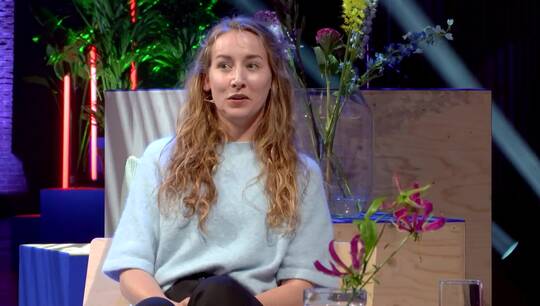
[Music] you just said my name I'm Lauren Hilliker I'm on the interwebs so when you're making fun of me when I fumble in this talk please include my social media tag epileptic rabbit feeds my ego and it makes me feel good about myself when people tweet about me so please do that um do you guys know that game where you tell somebody two truths and a lie that's what these bullet points are one of these things is not true how I speak how I dress my slides the stuff I say all of these things in combination with your own backgrounds your own experiences your education your relationships these things all put together are gonna help you form a story about me personally and the thing I want you to remember during my talk is that your story about me as is your story about most things in life it is just your perception it doesn't make it true just because you think it so 34 thousand years ago in a large cave in southern France an artist took pigment and started painting on the walls of a cave now these are some of the first known paintings and they painted these animals some of them now extinct gazelles and bison rhino running around but they weren't just portraits of animals they were animals interacting with one another the world around them interacting with humans and it's because of these paintings that we have an idea about what life was like 34,000 years ago for our species now story is how we remember the past it's how we think about the future it's how we create our identities the days of the week are stories that we invented to organize time sicknesses our stories that we invented to explain our own mortality and by the way I don't know about any of you or if you are in the room for the last talk but I do not want to live to be 150 just throwing that out there stories are in everything the interactions that we see on the caves in southern France between these animals are stories and interaction is a story every interaction is a story now stories don't have to be fictional and they don't have to be artistic and stories don't belong to certain kinds of people in fact next to language theorists often say that narrative and storytelling is the most distinctive human trait it's in everything that we say everything that we do every structure and system and process that exists in our lives are stories that we made up and we could change so you have to think about this for a minute think about the way that you talk to people the things that you do you don't submit factual reports to your friends and families to talk about your day you tell stories about what happens now Greenpeace wants to tell honest stories Greenpeace is not nor has it ever been strictly an environmental organization we're also not an animal rights organization although a lot of people seem to think that Greenpeace is an organization that exists to protect biodiversity in all of its many splendors and our mission is really simple it's for a green and peaceful world which is genius because we put it in our brand green peace that is our mission the stories that Greenpeace tells are designed to put the ecological movement on an equal filled with forces that might have more power we aim to put this movement in the same level as social movements cultural movements these these systems that we have that people are interested in we want people to be interested in our planet because it's kind of amazing so we use our story to access power we use stories as a tool to access power and we've always done this and we've always used networks social networks and media to access power and to create change in the world before Greenpeace was an organization or an office or a movement or a bunch of hippies it was a ship and an action so the super super short founding story goes like this in the early 1970s the United States government wanted to test a hydrogen bomb on a small island off of the Pacific Northwest Coast called em chica some people in Vancouver found out about this test and they you know got a little concerned they were like what happens to life on around below nearby the island if you like exploded a nuclear warhead there and they were worried about like a tidal wave coming and hitting Vancouver they were worried about radiation poisoning and they thought that this was going to affect their lives and it concerned them and so they went out and they talked about their concerns with other people they started networking they started protesting in the streets they started saying nobody has told us what's gonna happen if this bomb goes off and were scared how about you and other people became concerned and joined in so all these people got together they're like protesting in the streets but the United States government the Defense Department actually showed no signs of canceling the test and so this core group of people said there's got to be something we can do let's go there let's go to the islands well we'll tell them we'll show them and they for a benefit concert it was a hippie rage and they raised some money and then they leased a small fishing trawler that Phyllis Cormack and they went out to sea to put their bodies in the way of a bomb but the other thing that this group of citizens did the thing that set a chain of events into motion that would lead to the environmental movement as we know it today was they told stories the founders of Greenpeace had a visceral understanding of what it means to inspire and engage through storytelling so they didn't just sail out to sea and not tell anybody about it they sent images and pictures snippets of conversations back to land and and this was broadcast over media right and they put out press releases about what they were doing and basically what happened was everybody was like oh my god look at this stupid hippies what are they doing and that was the beginning of Greenpeace now Bob hunter one of the founders said that these images were mind bombs a mind bomb is a story that's designed to shift perspective and that's actually exactly what happened because all of this media that was coming out from the Phyllis Cormack into the world was changing the way that people thought about their own power and their own civic participation this was inspiring to people this is another mind bomb working with ships has given Greenpeace the ability to go to places that most people are unable to go to and witness environmental crimes and in justices that most people will never witness and because we are there we are bearing witness because we document what we see we are acting and we hope that by sharing this information and these stories with other people other people also be inspired to act now when people think of Greenpeace often what they think about is some crazy activist Stan in front of a bulldozer or hanging a climber hanging above raging waters people have this vision of our brand as being a promotional of an activists lifestyle people think if you're involved with Greenpeace you must be a rebel a lawbreaker a force against the status quo and they think this for two reasons number one because it's true Greenpeace is full of bold courageous independent individuals who are on the front lines fighting for our planet they're doing this for all of us they're not doing it for themselves they're doing it because there are planetary boundaries that exist and we are cute little species are really kind of pushing it we really are and Greenpeace people are courageous so that's why people think that Greenpeace is like that but the second reason that people think that Greenpeace is you know rebel organization is because we spread that idea we spread iconic images and stories now the environmental movement is a story that all of us know at this point we know the characters it's greedy faceless corporations who care about nothing but money annoying environmental activists who are barefoot and expect everybody to be a vegan and then of course the idiotic consumption driven public who know nothing of breed or planetary destruction so we know these characters I mean know the conflicts between them we know the setting that's our planet of course and it everybody knows this story it's ingrained in us it's part of our culture and over the years Greenpeace has really kind of gotten into this doom and gloom kind of narrative about the environment like just think about how I describe the characters faceless greedy annoying stupid I think I said idiotic we've been telling the story of our planet and the environmental movement as if all the characters are bad we've been telling our as if it's part of an apocalyptic genre and that is why when you think about climate change you are depressed because people think about death and destruction and mayhem which is not actually entirely true there is hope out there for our planet but we've been using this this sort of negative narrative for years and years and it's been really successful because everybody knows what the environmental movement is it's just that people don't really care and that's a little bit problematic because the voices out there in the world that deny climate change is happening are really loud and they continue to push ecological boundaries past the breaking point and so these ideological disagreements about our climate have sort of parallel paralyzed global action governments aren't doing enough organism companies corporations aren't you enough people aren't doing enough like we have a problem and the thing is just like Greenpeace is guilty of this most a lot of climate activist organizations are guilty of using this negative narrative and and really like focusing on rationality and science to get the point across while meanwhile our opponents have been using better stories stories like lots of freedom lots of prosperity and the fear of inconvenience they use these emotional narratives that make people not care and we have to we realize that Greenpeace like we have to change our modus apparatus right we can't we can't continue to ostracize people because the thing that we're like trying to do in the world is actually really important and you know we have to provide an emotional context we have to help people understand the awe and the beauty and the in inspiration that comes from having an appreciation of the natural world and acting in a way that is in concert with that world because people have just become really overwhelmed the thing is is that I started this talk talking about stories right and I did that because the power in this world the power dynamic of our society and our culture and our organizations it lies with those who shape the conversation and everybody in this room shapes the conversation you are the people that are out there influencing people on what to believe and how to feel and the thing is is that corporate advertisers I'm not talking about your corporation specifically but generally like the big corporate advertisers they've been using these stories for years and years and years that we will be smarter and prettier and better and cooler if we just keep buying new stuff and if we just keep consuming without actually thinking about what what we're doing there's these pervasive myths out there so community engaged and engagement is not the same as customers and service thank you and digital marketing is not the same as digital advocacy and we activists we use our social media in our brand to ransack corporate bullshit basically and and propose a different vision for our collective future which is why I'm here today so growing up I was a freak people told me I was a freak I felt like a freak I was like kind of a weird kid I got put in all those freak classes you know the ones for smart people it wasn't actually cool and I like really resisted this vision that other people had of myself because I didn't actually believe that I was a freak I thought that it was just like you know okay and I like really thought about the nuances in our world like all the stuff that we learn so how many of you have ever heard the phrase stranger danger I see a show of hands that must be an American as I'm not a lot of people so this idea of stranger danger is like beware of strangers don't take candy from strangers how many of you have heard the phrase kindness of strangers Wow really an American up here okay kindness of strangers another common colloquialism which means that you know people can be nice and we're taught these conflicting ideas all of the time so I just taught the story of an individual ISM I was taught that I would have to make my own way I was taught not to look at my neighbors paper because it's called cheating as an adult I've learned that's called collaboration uh-huh I learned that I would have to struggle to survive you know and then nobody was really gonna help me I needed to learn to adapt you need to fit in oh stuff right and then I also learned that people would help me through my experiences my friends and family wouldn't help me all of the time I have colleagues sitting in the audience right now that came here just to support me like people are kind people can be trusted and it's just this weird dichotomy of what we are taught versus what's real and it's it can really mess with a person but the thing is is that we have freewill and we get to choose what we believe and when we start paying attention to the things that we believe and our own cognitive biases we start to make different decisions in the world so at Greenpeace we kind of realized that we needed to have a different narrative for the environmental movement because it's too important we need one that is as powerful as some of those cultural undertones that were taught growing up living in Western society and and we really like we want to be positive about it we want to be hopeful about it because there is hope and technology has has brought us some hope I think we do have a future that is balanced and modern a social renewal and progress like the story of a girl who went from being a freak to be a total badass where the girl is all humans and the journey is from a system and a planet built on competition and this growing thing to a system and a planet that's built on cooperation and sort of finding a way to be okay with what we have so Greenpeace as well as the other communities that I spend my time around like the open source community and the cooperative community we're having these conversations about what it would mean if we really sort of think critically about the growth economy and maybe put some effort towards some solidarity and collective effort to figure out if maybe the growth economy is something from another age the industrial era maybe we don't have to grow all the time maybe it's not about like having more than the people the companies organizations the countries next to us maybe there's another way and maybe just maybe we can use our broadcasting story broadcasting power to tell the story of people who are finding different ways to live that don't fit inside what we these preconceived systems and processes that we just hold to be right so our theory of change is really simple we believe that in order to change the world we need to go after the stories that sheep a person's behavior and a person's sense of what's possible so you want to know about our brand strategy I well we live in a world of direct communications peer-to-peer shares people bypassing the gatekeepers we're in real time real space Facebook live Twitter the downfall of the official narratives like people are no longer trusting the official story they're starting to stand up and they're starting to say wait a second this world we're living in is this really is this really what we want is this really the right the right way and all of these things all of this this sort of upheaval in our world is an opportunity to sort of reinvigorate our brand as a story and as a thing that can help people and empower people because technology has given the microphone to those people anybody can have an opinion now and if we can help people actually share what they know and tell their stories use our broadcasting power not to represent I can't iconic representations of our organization but rather to show places and people and projects in the world that are creating real change like and empowering people then that's what we should be doing and that brings me to plan it for so I have 9 minutes and 16 seconds left I could talk about this project all day because it's really complicated but I'm just gonna give you some key points Planet four is the codename for the engagement platform that we're building at Greenpeace I'm going to show you old slides outdated images because we're moving very fast with this project and we changed a lot and I made these slides like four days ago so naturally everything's outdated Planet four is about community building so at Greenpeace we are building this engagement platform not for the global community but with the global community community building is something that happens when you design your project for participation so from the very beginning the planet for team has been working openly we have a medium publication where you can learn everything there is to know about building a piece of software or building an engagement platform we publish early and often we're not spinning processed there's not a marketing department if you want to know about issues we've had problems failures fights you can go read some of my open-source comm articles because I've written about teen dynamics and failing and criticism we're transparent and inclusive we basically tell people what's happening for real like no spin just like this is the stuff we're working on and if you're interested and you want to get involved please do and we invite people to participate we run community calls we run surveys we ask people what they think before we know what we think we share things before it's done like before it's completely developed because we're a small team and we're just one organization and we're trying to do something for a global community so it makes sense to ask the global community if if they have some thoughts it's open source I use this term working openly I can talk about that all day too but now I'm down to seven minutes and six seconds this is like a weird thing so our planning documentation our roadmaps everything about this project is open source of course the code - if you want to know what happened on May 17th 2017 in that meeting we had about whatever there's notes and you can go and read it might not make a lot of sense to you but feel free and the reason that we're doing this is because as part of a series of organizational changes Greenpeace really wants to share its knowledge and expertise Greenpeace is good at some really interesting things in the world and if we can share that and that will empower people because you know there's no reason to reinvent the wheel all of the time I already said that it's an engagement platform it's not designed to shout information we as I said earlier we got into this habit of using rational rational arguments and and scientific fact that kind of bored people but as with this platform it's it's about telling stories and empowering people to get good stories that they need information that they need and truth that they need because you know even the truth needs storytelling and telling the truth is still important but also to help them understand what they can actually do and because it's not all or nothing there are tiny little changes that each of us can make in our lives that makes a difference if millions of people do a single thing it's like millions of people doing a single thing that's huge and so Greenpeace really wants to sort of change the way that it does content and help people understand how individual actions matter what you do matters and small tiny choices that you make in your life have global impact can have global impact and so we want to give people the tools that they need to act on behalf of the planet and sort of redefine what it means to be an active citizen we built it to be accessible if we follow all of the appropriate standards its device agnostic which basically means that no matter what device you're on or what kind of disability you might have your experience with Greenpeace should remain the same and we're designing I just talked about accessibility and then I showed not accessible designed which is interesting I you can talk to me after I'll tell you why that happens and but basically one of the Quaker principles that inspire the founders of Greenpeace was this idea of bearing witness and so Greenpeace is an organization that sheds light on particular topics and issues and We the People take action to create positive in the world and so shedding light is our aesthetic theory for the platform and basically we use diagonal intersections and gradients to guide users through our content and push them towards things that they can actually do to take action and when I say things that they can do I mean going beyond clicktivism going beyond the petition and helping people understand that that there are things that you can do like breathing techniques even that make a difference in how we interact with each other I was a weird example but I didn't write before talking because talking is nerve-racking and so with these diagonal flows shedding light also sort of redefines how we use our images if you go to media Greenpeace org there are millions and millions of epic and awesome images of our world and we at Greenpeace use those images to illustrate our stories and our content and shedding light sort of says that if we're going to show images of what's happening in the world especially if we're using that negative narrative and showing destructive images which we do have to do from time to time we're going to jumps to pose it with people supporters activists who are out there in the world trying to create positive change finally I am not sure that you noticed from the screens but one of the innovative features that we're going to try out and test has to do with organic navigation we only have two buttons in our navigational structure this is pretty bold and daring but nowadays the vast majority of the millions and millions of people that hit Greenpeace at work they're not coming in through the front door they're coming from social media direct content shares etc and the way that people use the web nowadays sort of like people go down the rabbit hole you get shared something you're interested and then you kind of click internal links right you guys all know this I don't have to be so pedantic ly descriptive but basically we have this theory that if we actually organize our content in that kind of organic way make it networked instead of hierarchical that people might actually stick around longer and find more things that they could do that inspire them empower them and help them take action on behalf of the planet so software customizations selenium jenkins get flow continuous integration shared services multi-platform approach etc when it comes to technology we're building an engagement platform for a global organization so the tech is pretty interesting and pretty complicated it's built on top of WordPress which i think is cool we're contributing back to the WordPress core I'm going to talk about that all day too but I thought maybe this audience wasn't super geeky and didn't want to hear all about our crazy awesome text stack but the point is is that this platform will eventually run green pieces entire digital identity it's 55 national and regional offices who have a website hundreds of languages millions and millions of users and the platform is really designed to sort of show the interconnectedness between the environment and literally everything else in life so to close like I wanted to show the engagement platform because it's a project near and dear to my heart and I would be remiss if I didn't say that it's been my honor and pleasure to work on the planet for a team they are awesome bunch of crazy rabble rousers and to close I want to say that we're we're in this place with technology and society where we get to choose to continue to use the systems and structures that we put in place a hundreds of years ago or to use technology to maybe rethink some of the stories and the pervy Asaph myths that run through as friends through our society so in a time when dichotomies abound between the right and left in a time of political upheaval and this us-versus-them mentality that's become a very part of our social fabric idealist like me both at Greenpeace but out there in the world of tech and art and and you know activism in every industry idealists are looking at the world around us and we're saying you know what we're not in competition with each other we have this technology that allows us to grow and connect and redistribute the the resources that we already have maybe we don't always need more more more maybe we just need to rethink what we have and try to reconnect and at sort of that human level let's let's stop competing with each other and start cooperating [Applause] [Music]